A recent two-week backpacking journey through various European nations provided a seasoned travel reporter with a stark contrast between social media's romanticized depictions of adventure and the often-unvarnessed truths of such an undertaking. The experience, which spanned Germany, Austria, Italy, and Switzerland, was characterized by unexpected logistical challenges, physical discomfort, and a constant battle against the idealized images prevalent online.
The Unvarnished Reality of Backpacking Through Europe
In October 2022, a travel reporter embarked on a two-week solo backpacking expedition across several European countries, including Germany, Austria, Italy, and Switzerland. The journey encompassed visits to prominent cities such as Berlin, Vienna, Venice, Rome, Milan, and Zurich. Driven by a desire to travel light and immerse herself in the European experience, the reporter utilized a 32-liter backpack and relied on budget accommodations like Airbnbs and shared overnight train cabins.
One of the initial challenges arose during packing. The reporter discovered that her largest backpack could only accommodate half of her desired wardrobe, necessitating frequent laundry sessions at each accommodation. These tasks, often performed upon arrival in tiny, cluttered Airbnbs, added to the fatigue of travel, transforming resting spaces into disheveled areas filled with drying clothes.
The overnight train segments of the trip proved particularly demanding. The reporter booked two such journeys to maximize daylight exploration, only to find them uncomfortable and lacking privacy. A shared cabin for six on a Nightjet train from Vienna to Venice, despite hosting only four passengers, felt severely cramped. Bunks lacked curtains for privacy, forcing the reporter to use the bathroom for changing and inconveniencing fellow travelers when needing to access the cabin door lock. An even more challenging overnight ride from Berlin to Vienna in a standard seating carriage offered little to no sleep due to limited legroom and constant disruptions, leading to profound exhaustion upon arrival in new cities.
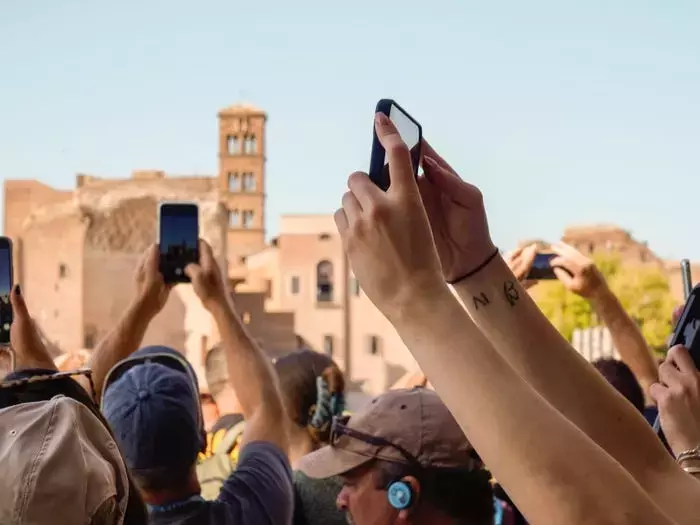
Beyond the logistical hurdles, the physical toll of continuous backpacking became evident. Carrying a heavy pack for extended periods between train stations and accommodations resulted in persistent muscle soreness, leading the reporter to question the perceived convenience of a backpack over a wheeled carry-on. Furthermore, despite traveling during the "shoulder season" in October, popular tourist sites were overwhelmingly crowded, making it difficult to fully appreciate landmarks and navigate narrow streets with a bulky pack. The reality of jostling through throngs of people sharply contrasted with the serene, solitary images often shared on social media platforms.
This reporter's journey serves as a powerful reminder that travel, especially backpacking, is often far from the perfectly curated moments we see on social media. It underscores the importance of tempering expectations with practical realities. While the allure of spontaneous adventure and minimalist travel is strong, the experience highlights the value of thorough planning, considering personal comfort, and acknowledging the potential for unexpected hardships. It teaches us that authentic travel often involves navigating discomfort and embracing the imperfections, ultimately leading to more profound and memorable insights into both the destinations and ourselves.