Navigating the Digital Divide: A Transatlantic Trade Tangle
The European Union's Stance: Addressing Anti-Competitive Behavior in the Digital Realm
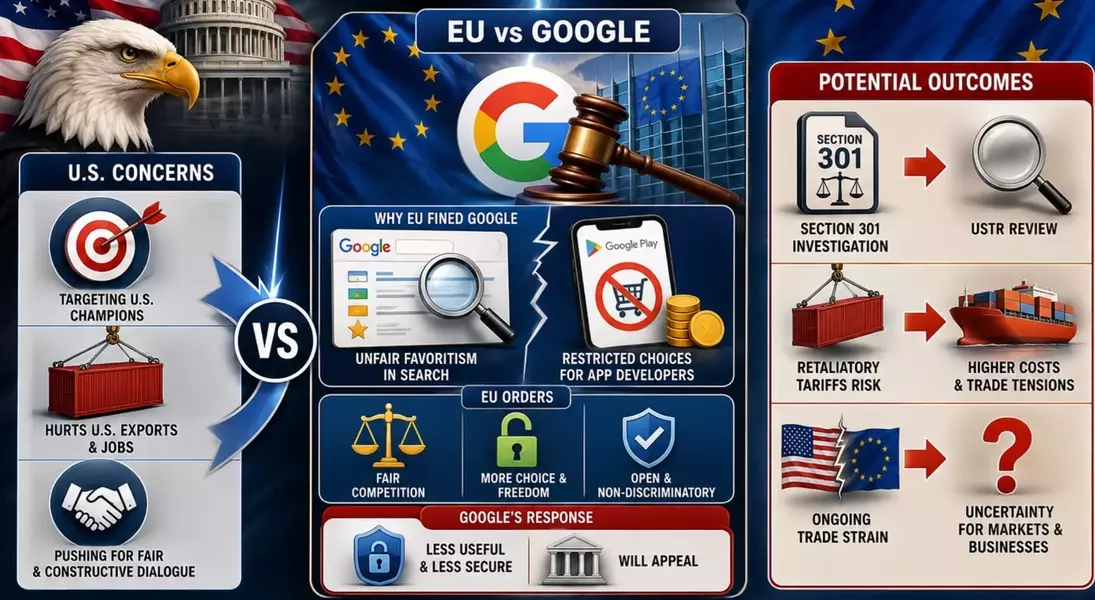
The European Commission recently imposed a significant financial penalty of €890 million (approximately .0 billion) on Google. This punitive measure was levied in response to Google's alleged breaches of the Digital Markets Act (DMA). The Commission asserted that Google unfairly prioritized its proprietary services within Google Search results and restricted application developers from offering alternative payment processing options outside the Google Play ecosystem.
Google's Response: Disagreement and Intent to Appeal
In the aftermath of the EU's decision, Google expressed strong disagreement with the ruling. The technology giant argued that compliance with the new regulations would inevitably diminish the utility and security of its product offerings. Consequently, Google has declared its intention to challenge the fine through an appeal process, setting the stage for a protracted legal battle.
USTR's Concerns: Protectionism and Disproportionate Targeting of US Firms
The United States Trade Representative (USTR), Jamieson Greer, voiced considerable apprehension regarding the European Union's regulatory actions. Greer criticized the EU for what he perceives as a pattern of disproportionately targeting highly competitive American companies. He contended that such actions introduce significant uncertainty for US exports of goods and services destined for Europe, potentially undermining the transatlantic economic partnership.
Undermining Dialogue: EU Actions and Trade Relations
The USTR further emphasized that despite ongoing efforts by the US to engage in constructive dialogue and address concerns pertaining to the EU's Digital Markets Act and other regulatory initiatives, the recent measures taken by the EU are actively hindering these collaborative endeavors. This suggests a growing rift in diplomatic efforts to resolve trade-related disagreements peacefully.
The Specter of Section 301: Potential US Retaliation
The EU's actions could lend credence to arguments from the Trump administration, or future administrations, that the EU is engaging in discriminatory practices against American technology companies. This scenario might provide a basis for invoking Section 301 of the Trade Act of 1974. This legislative tool empowers the USTR to investigate foreign policies deemed unreasonable or discriminatory against US commerce and, if warranted, recommend retaliatory tariffs. While the current fine does not automatically trigger tariffs, it could serve as a catalyst for a distinct USTR process and a presidential directive on trade retaliation.