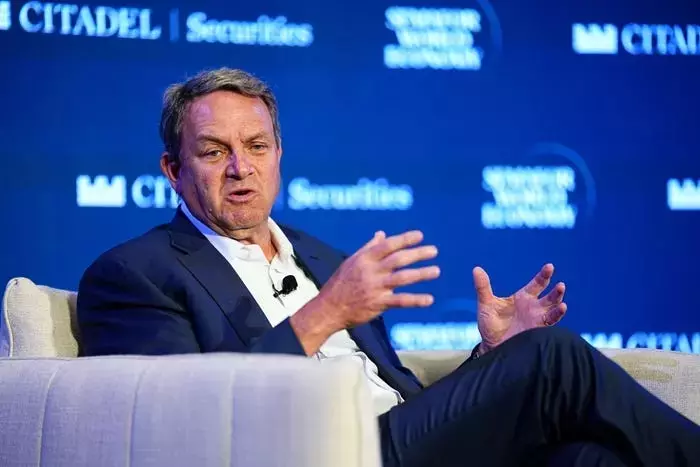
In an era where traditional cable television faces an undeniable decline, media companies are confronted with a critical juncture: adapt or risk obsolescence. Versant, a major player in the media landscape, is actively navigating this challenging transition under the leadership of CEO Mark Lazarus. The company's strategy is multifaceted, focusing on a careful management of its legacy cable assets while simultaneously investing in and expanding its digital offerings to secure future growth.
Many media entities with significant stakes in cable broadcasting are exploring divestiture as a primary means of adaptation. For instance, Disney recently offloaded its share in A&E and other networks, fetching a substantial sum. However, Versant's unique corporate structure, having been spun off from Comcast with cable networks as its core, precludes such straightforward exits. This necessitates a more intricate approach for Lazarus and his team, demanding simultaneous attention to three key strategic pillars: orchestrating the graceful decline of the traditional cable business, channeling its generated capital into innovative digital ventures, and ensuring shareholder satisfaction through financial incentives like stock repurchases.
A recent financial update from Versant illuminated both the hurdles and the promising prospects inherent in Lazarus's strategy. The anticipated downturn in the conventional television sector is materializing, with a 6.3% reduction in distribution revenue year-over-year, largely due to a shrinking subscriber base. Despite this, advertising revenues have shown resilience, experiencing only a marginal dip, primarily sustained by the enduring appeal of individual Versant channels such as CNBC and MS NOW. Encouragingly, the company has revised its full-year revenue and profit projections upwards. This stability is crucial, as Versant's immediate goal isn't to reignite cable growth, but rather to ensure its contraction is sufficiently gradual to provide a consistent stream of capital for reinvestment.
In parallel, Versant's non-cable segments are demonstrating robust expansion. Excluding the impact of SportsEngine's sale earlier this year, the company's 'platforms' division, which encompasses successful digital brands like the movie ticketing service Fandango and the golf tee-time booking platform GolfNow, recorded an impressive 9.3% growth. Furthermore, Versant is vigorously developing new digital subscription services, integrating them with its existing television properties, including an upcoming MS NOW service slated for launch this autumn. While these digital growth areas are unlikely to fully offset the decline in the core cable business in the immediate future, they signify the strategic direction and long-term vision of the company.
To appease investors during this transformative period, Versant has implemented a robust capital return program. The company projects generating up to .2 billion in free cash flow this year, enabling it to distribute quarterly dividends and engage in significant share buybacks. Having already repurchased 0 million worth of shares in the spring, Versant announced an additional 0 million buyback, a move that likely contributed to the nearly 10% surge in its stock price following Thursday's announcement. This strategy aims to assure shareholders of tangible returns, regardless of the long-term trajectory of the cable industry. Investors are drawn to Versant not necessarily by the prospect of a cable resurgence or the immediate success of its digital replacements, but by the company's ability to extract and return value from its existing operations, offering a clear benefit even amidst broader industry shifts.